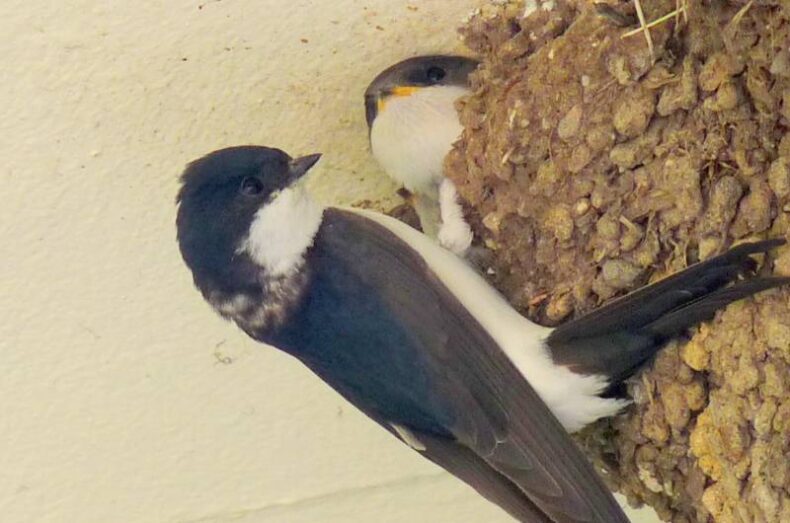
Image above: Nesting house martin by John Parish
This months Wildlife Watch article has been written by Lea Merclova from Bird Aware Essex Coast, thank you to Lea for being a guest writer on our page.
As we wave goodbye to spring and welcome in the summer months, most of our seasonal bird visitors are already sitting on their eggs. Or someone else’s eggs (the cuckoos have arrived too!).
In spring, a change in bird sightings may have caught your attention. From March, many of our wintering friends started leaving for the more northerly quarters of Scotland, Iceland, Scandinavia and the High Arctic where they nest. This includes many ducks and geese, and berry munchers like redwings and fieldfares. Some, such as robins and blackbirds mostly stay the year round, while birds from Southern Europe and Africa, the likes of swifts, swallows, martins, terns and many warblers come here for the summer.
Checking the British Trust for Ornithology’s app, I can see that house martins and common whitethroats had arrived in Chelmsford and were seen along the river Chelmer near Bond Street, on the meadows both sides of Chelmer Road and in Little Waltham.
These two very different birds that I spotted on the free citizen app have one thing in common: they make a very long and dangerous journey to raise their young here.
If you take a stroll around these areas, or anywhere else across the Chelmsford district, and hear the delightful tune of a bird, you can check what species it is via the free Merlin app!
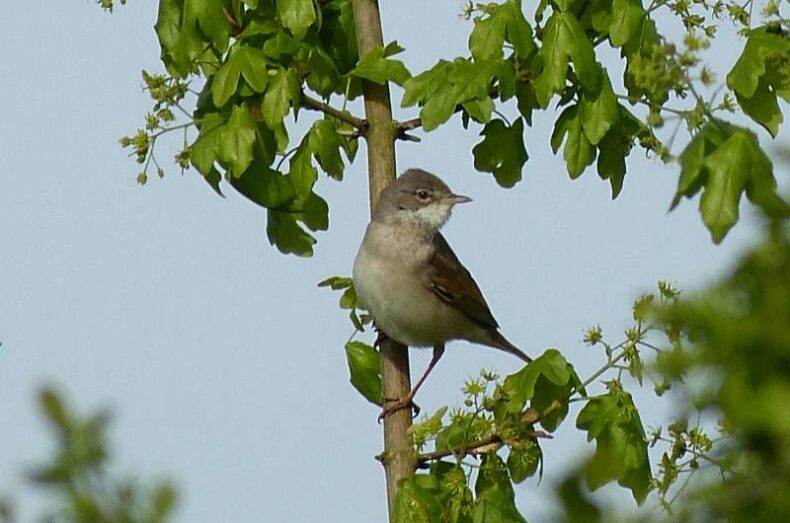
Image above: Common whitethroat by John Parish
Common whitethroats, or whitethroats, are small and noisy warblers who move into our scrubs and hedgerows around April. The males arrive from the hot and dry Sahel about 10 days before the females and start the busy, energetic task of nest building. You may have seen birds such as these flying with feathers, sticks or other nesting materials in their beak as they raced against the clock to the secure their nest spot. Joining them later on, the females inspect the prospective summer residences and choose the best builders and decorators as their partners. After settling in, they both incubate their eggs and care for chicks after hatching. If there are enough beetles and caterpillars, they might try for a second brood in July. This would be fantastic news since they are on the UK’s Amber List of endangered species, and their population almost completely crashed in the late 1960s because of a severe drought in Africa. Give these guys some food and shelter and they will bounce back! Birds are incredibly resilient when given half a chance.
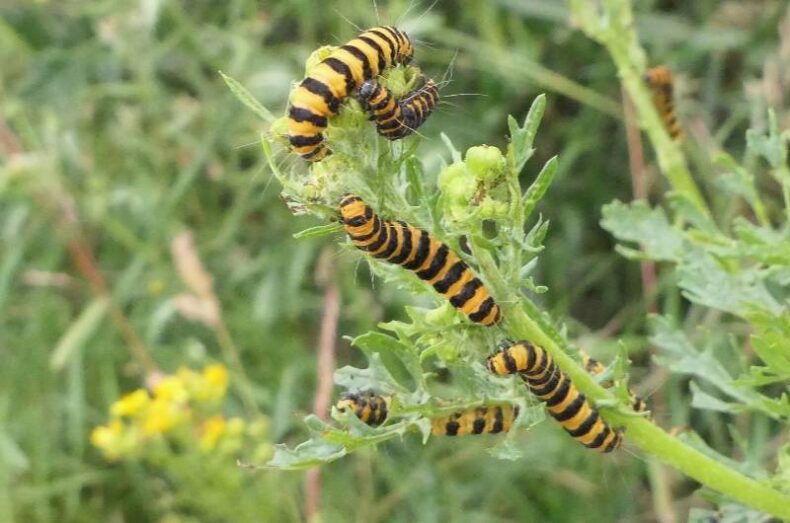
Images: Cinnabar moth caterpillars by John Parish. Caterpillars are essential food source for breeding birds who need protein rich diet for their chicks and will usually switch to berries in winter
House martins also come to us all the way from sub-Saharan Africa but their nesting and feeding habits are quite different. Originally cliff nesting, they have very successfully established themselves under our overhanging roofs, especially in small towns and villages close to wetlands and riverbanks. Since the use of plastic in renovation, rather than the previously chosen materials of wood and concrete, the muddy nests don’t stick anymore for this species as they once had, and fall down. This is one of the three challenges they face. The other two are the lack of available mud because of drought and drainage, and the collapse of insect populations, which form their only diet. These factors, likely combined with others like changing climate and loss of habitat on their winter grounds, led to an almost 50% decline since 1970 and pushed the house martins on to the Red list of UK species, meaning they are now critically endangered.
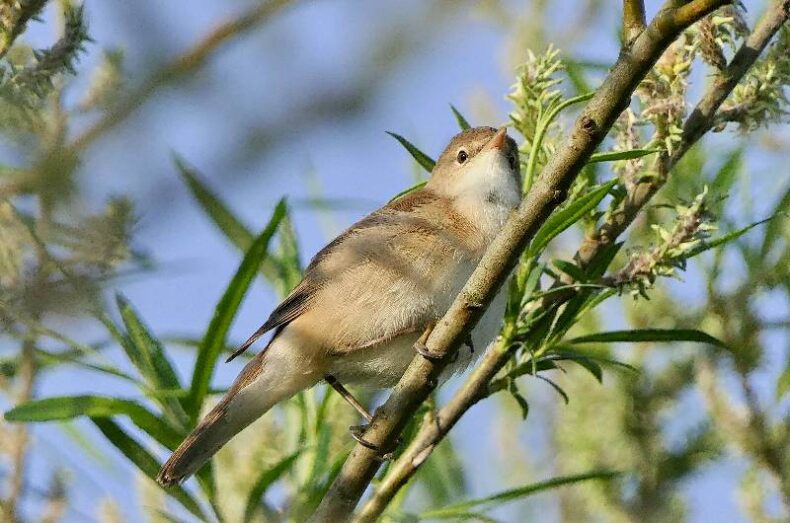
Image: Common white throat – John Parrish
Here are some tips on how you can help:
- If you have a garden, don’t mow or mow just some parts, while leaving others to grow long. This creates habitats for insects and caterpillars and helps pollinators.
- Wildlife flower mixes and species rich turf support much more life than a ‘golf course’ lawn.
- Don’t mow when it’s hot and dry, it exposes the soil and everything that lives in it.
- Weed killers and pesticides create wildlife deserts. Try to limit their usage where you can.
- Create shades and shelters- damp parts are the winners! If you can, try creating a little shaded pond.
- Plant native shrubs and trees. Choose at least some with berries. They are pretty in autumn, and they are food!
- If you want to help martins, swifts and swallows, keep your eaves a garage free for them or install artificial nests. You can also keep trays of wet mud around.
- If you don’t have garden yourself, get involved with a local park or reserve and encourage others to do the same.
- Keep on reading and building connections. You can read more about how to help house martins on https://housemartinconservation.com, read my latest blog about eggs on https://birdaware.org/essex/blogs/ or join on of our guided coastal walks https://birdaware.org/essex/events/ .
Article by: Lea Merclova (Wildlife Ranger for Bird Aware Essex Coast)
For more information and tips about Bird Aware along your Essex Coast and surrounding areas, follow along on social media: